Saturday, September 13, 2014

Initial Forays Into the World of Modeling in Physics Instruction

Introduction: I was fortunate to be accepted to participate in the Modeling Workshop that was conducted by the North Central region of Michigan via COOR ISD this summer. 

Goal: Since I was teaching a summer course at the same time that the workshop has been conducted, I thought I would put some of what I have learned to the test immediately to gain more hands-on experience with the modeling approach to instructing Physix before the following academic year begins.

Philosophy: I think one's success with new approaches to instruction would have higher chances of success if one allows the new methods (Modeling approach in my case) to seamlessly blend with her/his way of doing things. In other words, one has to own her/his Modeling way.

The Nadj! Approach Constant Velocity Particle Model: 

1) I like starting my Physix units by having students analyze art pieces and extract preliminary Physix concepts out of them. In this case, the students were shown a visual art piece (see image below) & a video that shows the Berlin philharmonic under the directorship of maestro Herbert Von Karajan conducting playing the last movement of Beethoven's 9th symphony. Students were to compare & contrast the two art pieces Physix-wise, a class discussion ensued, and the idea of motion and movement emerged naturally from the experience.


2) Couple of Clickerims were given to prep the students for the Constant Velocity Particle Model lab.

3) Following is a sequence of pictures that shows some aspects of the modeling process.


Task Board that explains to students what their respective boards must contain.
One of the group's set up for the CVPM lab (notice the little tabs for time calls.)
   

Student sets her iPhone to videotape the motion of her group's buggy.

CVPM lab run of one of the groups.
Boards set for whiteboarding sessions! :-)
4) The students' engagement, the ideas they had to generate, the details they had to wrestle with, the whiteboarding session that ensued, and the levee of understanding reached were all a marvel thing to witness.

This is just a snapshot of what had transpired this summer and hopefully more Coolisms will emerge as I become more familiar with the method and the wonderful outcomes it seems to readily yield.

Thank you for reading this blog post and I encourage you to comment about similar experiences you had, suggestions you may offer, or pedagogical ideas this may have triggered in your mind. Please, commit your thoughts to the comments area. 

Model away, Model all the way! :-)    

Sunday, June 22, 2014

Physix in Images 2013-2014

First: I apologize for the lack of activity in my blog.

Second: There were precious moments in Physics (3 sections) & Astronomy (new section) and I thought instead of blabbering about them I should just let some pictures convey the extent of the fun as well as learning.

The Smiles of Pride! :-)
Tip of the Hat to Sir Isaac Newton!
When Physix meets Art; only Coolism ensues! :-)
A Cool Student PhysArt Project
Nothing beats the connectedness between Physix concepts!
Mechanical Systems (spring/mass) in Series/Parallel to contrast with Electrical Systems In Series/Parallel
Students love it when Experts present their work!
Dr. Brian McNamara discusses his work on Supermassive Black Holes & Exploding Galaxies!
Star Gazing Extravaganza wraps up a Cool First Year of Astronomy, look at the wide smiles! :-)
Optics meets Art! Backyard of our classroom with the Physix room acting as a Camera Obscura!
iPad used to generate Motion Diagrams. How cool is that?
Physix of Motion meets Art! iPad used to generate the corresponding Motion Diagram.
Testing Hypotheses about Combinations of Human Electric Generators (Take I)
Testing Hypotheses about Combinations of Human Electric Generators (Take II)
Taking the concept of Combinations of Human Electric Generators to its Ultimate Finale!
Students getting close & personal with Optics, Lens Equation Lab!
Physix meets Art, slide from a student's project presentation!
Physix meets Art (refer to previous image!)
Astronomy Lab on Plasma & Light Spectra, Sweet! :-)
Astronomy class experiencing Motion Diagrams (look closely to see the blue dots!)


Third: I hope the above excite you to share your own cool images from last year of Physics or Astronomy.

Thank you for taking the time to view/read the post and I hope you would be kind to leave some comments.

Thank you and take great care! :-)


Saturday, November 2, 2013

Geometry of Number Lines Makes Uncertainties Visible

Introduction:

Uncertainties tend to give students a hard time. So, I decided to approach this vital concept of Physics a bit differently this year by emphasizing the use of number lines as visual aids. This, would enable students, to not deal with uncertainties as pure abstract numbers only, rather they would graph them on number lines to reach better conclusions regarding uncertainties. 

The Nuts & Bolts:

In this experiment, a precursor to the actual Free Fall lab, the students dropped rulers to determine their respective reaction times and then, using their group's collective uncertainty number line (see images below) they decided (as a group) which student should be their stopwatch timer for the subsequent main lab activity. In addition, the students had to provide at least one complete sentence detailing their justification as to why they picked their respective group's timing person.

Following is a sample of my students' initial rough dabbling with such new approach. I am proud of them and the genuine effort they devoted to the activity!


This is Group 3's take on the matter & it is so easy for students to see unusual outcomes this way! Coolism! :-)

This is Group 4's take on the matter. The language is a bit more precise (pun intended) than I have ever had in previous years. The potential of this method is promising! Coolism! :-)


Reflections:

Of course, this visual approach may not be earth shattering but the beauty of it is in the following touches:
1) It makes the invisible, visible! Pedagogically speaking, this should improve understanding.
2) The connection this approach establishes with a math concept (number line) that students would rarely see/use outside of their math class. Physics adds Coolism to math!
3) This approach already seems to offer students a better and slightly more sophisticated way of expressing their thoughts vis-a-vis terms they need to learn to use carefully in their lab analyses such as accuracy, precision, uncertainty.

Coolism Request:

Please, add to the Coolism, by commenting on this approach and suggesting adjustments you would make to allow it to be more useful to our students conceptually speaking. 

In addition, share your own successful approaches so that together we enrich our respective students' experience with the concpet of uncertainties. 

Thank you 


Saturday, August 17, 2013

Cool Physix & Astronomy Apps to Consider

I thought starting the academic semester/year with a bunch of Physix Apps and strategies for acquiring them might be the best gift I give my fellow Physix teachers and instructors the world over.

So, within this PDF file I listed all the Apps I currently own, which I hope you can acquire as many of them as possible to make your educational experience with your students a richer experience at least as far as mobile devices technology is concerned.


Please, keep in mind that most of the apps were free when I first got them but some either were removed from the App store or a price was added to them.

Mr. Le Nadj! suggestions regarding app acquirement:

1) Check the app store every two weeks or so and search for new apps dealing with specific topics you are interested in.

2) Sift through the junk by setting the search criteria to be Free & the display to be based on Ratings so that you get the free apps that got the best ratings.

3) Download the chosen app(s) even if you may not think you would need it right away because they may either disappear or become pricy. You still can delete them if need be.

Happy Educational App Year! :-)

Saturday, August 3, 2013

Physics Reading Quizzes that Tap into Students' Creative Power & Show & Tell

Believing in the importance of reading in physics and science in general and in the vitality of writing creatively and clearly, I devised a few reading quizzes that enable my students to (a) demonstrate that they have indeed read some of their assigned chapters and (b) allow them to express themselves creatively within a physics context. 

Following are samples of students' creative outputs in such reading quizzes.


Sample 01: Notice the citations
Sample 02: Use of Dialogue
Sample 03: Notice the depth of thinking even prior to coverage of the topics at hand!

Considering the fact that these are reading quizzes that preceded the eventual coverage of the featured physics concepts, the students have done such a superb job with the concepts and I am very proud of them for their creativity, their reading effort, and above all their willingness to move their learning process to such unchartered territories!

Please, share similar assessment tools or activities you employ in your physics curriculum to foster the reading and writing skills of your students on one hand and enable them to express themselves creatively on the other hand. Thank you


Friday, June 28, 2013

Cool Students' Physix Projects

It has been a tradition of our Physix class to end the year with a major project that involves the students selecting one of three possible projects to complete.

Catapult Project: This involves the students building a catapult that meets specific criteria and tosses a medium egg as far as possible and over a one-meter high wall.

This is just one of many incredible catapults submitted throughout the years!

Instrument Project: The students who chose this project would build an instrument that meets certain criteria such as craftsmanship, variety of tone generation, etc. Below are some of this year's cool productions.

The ends are pennies!
Believe it or not, this is an organ (see the picture below).
The organ does work well! :-)

Cigar Box Guitar 1


Percussion Instrument 1


Cigar Box Guitar 2
Dulcimer
Percussion Instrument 2

PhysArt Project: This project entails the students to select any art area of their choice and put together and art piece that connect the arts with Physix. Below is a sample of such cool PhysArt projects from this year's collection.

PhysArt Project [Original Student Composition 1]
PhysArt Project [Original Student Composition 2]
PhysArt Project [Kaleidoscope]
PhysArt Project [Visual Arts Piece: LHC]
PhysArt Project [Physix meets Fabric (View 1)]
PhysArt Project [Physix meets Fabric (View 2)]
PhysArt Project [Figure Drawing with Einstein Quotes]

Please, share some project ideas you do in your Physix classes. Thank you

Tuesday, June 11, 2013

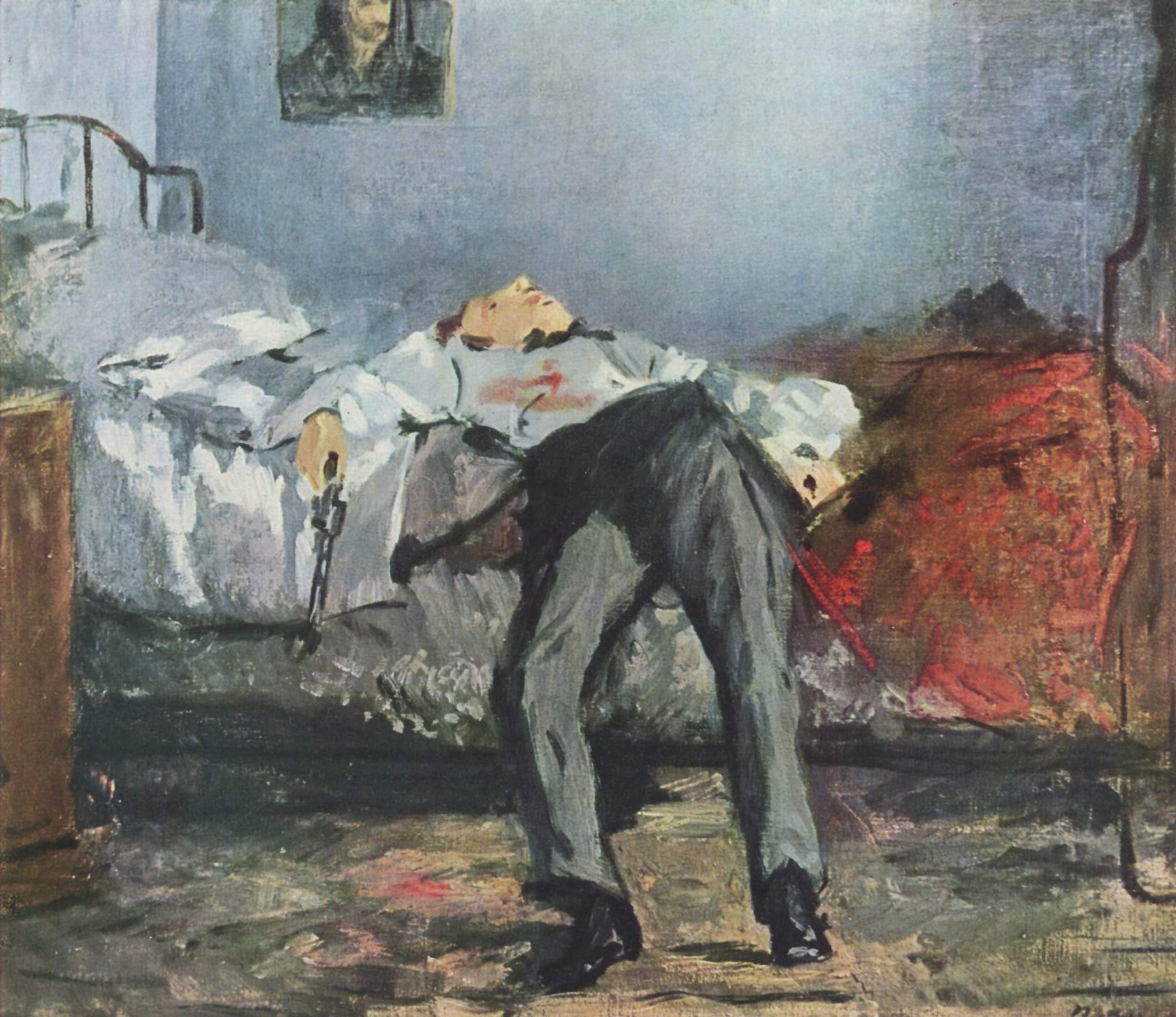
Art & Physix, what a powerful educational pair!

I have been fortunate to be an avid lover of the Arts. And, thanks to David Perkins and his highly recommended book "The Intelligent Eye: Learning to Think by Looking at Art", I was able to see the value of combining the Arts and Physix in my approach to teaching/learning Physix and to assist my students to grow as critical and careful thinkers.
The following activity is an illustration of such a nice marriage of the Arts & Physix. It involves a writing prompt (another way of connecting the students' learning in Physix with other areas of learning, English writing in this case) that introduces students to Scientific Methods, sharpens their critical thinking, and strengthens their listening and writing skills. 

*** Start of Activity ***

a) I hand students a little piece of paper each.
b) I display the two questions "Murder or Suicide? & What is your Physix-Based Evidence?" and ask students to use one side of the sheet of paper to   write their names, the date, and their responses to these two questions.  
c) In addition, I ask the students to use clues from the art piece itself (no Googling or Wikiing is allowed then) to guesstimate the general period of the art piece and the nationality of the artist.
d) I then display the following art piece, ask the students to use their clickers to pick one of the two choices (murder or suicide?) to collect data of their responses, and then give them the signal to start the thinking and writing processes. 

  
e) Once they are done, they stand so that I pair each student up with another student in class (think-pair-share) to discuss their respective responses and commit them to the other side of the same sheet of paper while making sure they write the names of their respective partners (to encourage listening, collaboration, staging an argument, and the value of citation.)
f) The papers are collected and then the students use their clickers once again to select an answer choice to gauge how much change in opinion did occur from pre to post discussion.
g) The class is shown the histogram distribution of their answers to the prompt but the actual answer is not shown (to build up some suspense) for it will be displayed in my reference/citation slide and long after all the slides that introduce and elaborate upon the concepts related to scientific methods.
h) The lively discussions, the intelligent arguments raised, and the preliminary Physix concepts used are the highlight of the activity!


*** End of Activity ***

Now, it is your turn!

1) Without looking up the source code of this web page, assume the role of one of my students, have a partner do the same, and go through the motions of the activity to test it.
2) In the comments area, share the results of your experience, your guesstimates, and the Physix of course!
3) Also comment on how you would use other art pieces to help your students appreciate art on one hand and connect Physix with art on the other hand?
4) I use other art areas in other contexts of coverage of Physix material (which I will share in future posts ISA), share what you do with your students.

Thank you and keep the Arts in mind while doing Physix for they are indeed a powerful educational pair!