Showing posts with label Physix. Show all posts

Wednesday, September 30, 2020

To Reflect or Not Reflect? Duh! Reflect, the ¡Nadj! ๐Ÿงฒ❤️๐Ÿ’š๐Ÿ’™๐Ÿ”ญ Way!

Reflections a la Nadj, SCAW!

As a general guide to reflections in all assessment items and any works that the students complete in my classes the student adhere to the following SCAW scheme.

  • Summarize ๐Ÿ™‚: Summarize what you have read, viewed, and learned while making sure that your summary is short and sweet.
  • Connect/Cite ๐Ÿ˜: Connect what you learned/read/viewed to the arts, your other areas of learning, and/or to your job or anything that you care about!
  • Apply ๐Ÿ˜Ž: Provide real life applications of what you learned/read/viewed.
  • Wonder(ism)/Probe Deeper/Question ๐Ÿค”: Ask astute thoughtful questions that demonstrate you have probed and engaged in the learning/reading/viewing process as deeply as possible.

Following are examples of such reflections by students in all my various classes, HS Physix, HS Astronomy, HS Forensic Science, 2YC Physix, and Physical Science for Elementary Teachers.

Thursday, February 15, 2018

STR Inspired Eulogy of Malek (RhA)

My love of Physix is only matched or surpassed by my love for my family. Malek (RhA), my dearest of brothers, passed away on 12/06/1992. The anniversary of his passing away on 12/06/2017 matched with the days that my students were working on their STEAM projects. It is customary that I complete a similar project along with them so that I experience what they go through while completing these physics and astronomy projects.

So, I decided to make my art pieces be a couplet of poems that pay tribute to my brother in the context of Special Theory of Relativity (STR). Following are the two art pieces.

1st STEAM Piece:

Stalled at c [by Taoufik Nadji]

Your ship sailed the seas of infinite spacetime.
Zipped at 86 percent c for twenty years and nine.
My azuric ship awaited yours for five decades and seven.
When is the return?
When is the encounter?
Dear brother, 
Life is chimera without you.
Physix and fate separated me and you.
And the wall of motion forever stalled at c.

2nd STEAM Piece:

The Envy of the Firmament [Acrostic "poem" by Taoufik Nadji]

Ready? I was not! Unaware,
Eternity's door was set ajar.
Dearest of brothers,
How am I to be consoled
About your journey to the infinite?

Massless, I wish I were! So that I can 

Accompany you
Like photons of pure 
Energy.
Know, heart of my heart, that my love

Restitches the very fabric of spacetime

Hoping to be forever undulated by you, by your gravitas,
And by your serene gaze that is the envy of the firmament! 

Note 1:  The first STEAM piece alludes to the concept of time dilation. I imagined that my current age and that of my dear brother, Redha Malek (RhA), when he passed away at the young age of 29 were predicated by his "spaceship" traveling at a speed that is 86% the speed of light.

Note 2:  The STEAM pieces try to address the following STR concepts, constancy of speed of light, time dilation, photons and their massless aspect, c being a universal speed limit, energetic nature of photons, spacetime, and mass. The undulation of the fabric of space time is actually a General Theory of Relativity (GTR) but it still fit nicely in the context of the poem.

Educational Notes: It is imperative, as educators, that we subject ourselves to what we expect of our students. This enables us to face their reality when we task them with projects and other kinds of work. This is why I have tried to always do a project along with my students whenever I assign them one. I wanted them to know that I care enough about them that I am subjecting myself to an experience that is as close to what they are going through as possible. In addition, it is valuable to share with our students a few aspects of our lives so that they realize that we, physics/astronomy instructors, are as human and as real as they themselves are.

Thank you for taking the time to read this post and feel free to add comments below.

Sunday, July 23, 2017

Groovy Physix or Bust!

I don't know about you (fellow educators) but I am of the opinion that physics and any kind of learning in general without music is less fun. 

I generally like to have some music playing as students file into the classroom, some playing as they exit, and especially some more playing as they are engaged in lab activities. 

From my own humble experience, nothing beats watching students grooving to some tunes while they are immersed in physics concepts discovery.

To ensure that such experience is successful I compiled playlists of different kinds. But, the most prominent one is the Physix Playlist whose songs were chosen with a specific set of physics ideas in mind. This would enable the students' imaginations to be tickled in more than one dimensional level. At one level, this acts as a low risk challenge of trying to figure out what are the concepts that the songs are possibly conveying. At another level, this establishes connections between physics and the arts via the beauty of music. And at yet another level, it establishes a better chance for the concepts to be stored in the brain with association with tunes the students care about. Of course, I have no research nor evidence to back up these assertions of mine but the least that can be achieved is my students having fun while learning. And, this in and of itself is sufficient for me to justify the infusion of music in the students' learning experience.

Music appreciation is a subjective matter and everyone of us should have their own playlists. There are a few instances when the students would request that they would have their own songs be played and I generally would concur but with one major condition. I insist that the songs they are asking to be played must be rated G, no bad words nor offensive lyrics. Following is my Physix Playlist that I hope would inspire my fellow educators to come up with their own depending on their own tastes and their own subject matters. 


 Please, feel free to suggest songs of your own that are not listed in my now playlist in the comments section of this post. Thank you and may groovy Physix and imaginative learning/teaching be with you!


Saturday, December 3, 2016

The Value of Observations: An Optics Activity

Dedication: I dedicate this and everything I do to the one educator who helped me appreciate the value of learning in the grandest of fashions, my late father Ibrahim Nadji (RhA!) Thank you Didi and may Allah (SWT) reward you for your dedication to raising educated citizens!

Physics, like other sciences, thrives with careful observations by its practitioners. Thus, it is imperative that we foster amongst our students the faculty of careful, deliberate, and conclusive observations. This would empower our students to appreciate even more the outcomes of the experiments they would conduct afterwards.

In what follows, I shall describe an activity that I use as a transitional activity that leads up to the discovery of the lens/mirror equation. The observations that the students make would eventually be confirmed or refuted by the said experiment and its emerging equation.

At each lab pod (the name I give my lab tables; another post shall explain the name ISA) four envelopes with optical pieces within them are set (the figure below show the optical pieces above their respective envelopes.) Two of the optical pieces are curved mirrors (one convex and another concave) and the other two are lenses (one converging and the other is diverging.)


White envelopes contain curved mirrors & yellow envelopes contain lenses

Two huge curved mirrors are also set on yet another lab pod. These will serve as further confirmations of the validity of what students may claim to have observed with the smaller mirrors.

Large Curved Mirrors
The students in each group are asked to rotate the optical pieces amongst themselves for observation purposes. And if at any point any one of them is done with their task, they should head to the big mirrors to complete similar observations to the ones they did with their respective small ones.

Curved Mirrors Observations Tasks: 
  • The students are to hold the mirror close to their face within 10 cm or so. This set up shall be referred to as Short Range (SR) observation. 
  • They would focus on a facial feature such as their nose for example and examine its image and pay close attention to its properties. 
  • They would sketch a table similar to the one shown below and record what are the properties of the image of the object they are looking at. 
Observations Recording Table

  • They must decide as to whether the image is upright or inverted.
  • They must decide whether the image of the object is bigger, smaller, or the same size as the object
  • They also must decide whether the image is real or virtual.
  • Note: A formal definition of real or virtual image is not provided yet. And, when students ask me what is real and virtual, I tell them to conjure up a definition of their own for now but they must be consistent as they make their choices. I want this property of images to emerge from the students' own observations rather than from me or some other source.
  • The students then would move the mirror farther but not much beyond 20 cm or so. This is the Mid-Range (MR) case.
  • Finally, the Long Range (LR) case, which involves distances farther than 30 cm, is to be completed next.
  • Once the students finish the above tasks, they are to repeat the same process with the other curved mirror and also with the two big mirrors but they do not have to record the observations for the large mirrors; it is optional.
Lenses Observations Tasks: 

  • The students are to hold the lens close to one of their eyes and then look through the lens at an object around the room. The object has to be within 10 cm or so from the lens. This set up shall be referred to as Short Range observations case.
  • Students then repeat similar steps for MR and LR situations and record the observations each time in a new table every time.


Once all of the above is completed, the whole class now is going to be involved in reaching ultimate conclusions regarding what has been commonly observed. Any variations amongst class members are going to become very visible now and the students must decide how to deal with the differences.

I put the original table (scroll above) back on the smart board and then began pulling three students' names at random from my index card set that has all the students names in it. I began with the convex mirror case first and I asked each of the randomly selected students to pick a favorite color of theirs to use to record their observations for the SR items. And, I kept doing this until all cases were taken in consideration. At that point I asked the class to select a class color and used that to poll the whole class as to what their choices were for each one of the situations, SR, MR, & LR still for the convex mirror case. The outcome of this whole process is summarized in the figure shown below.

Orange color is the Class chosen color while the other colors are those of the randomly selected students.
 I was expecting the last row to be the most problematic in showing variations amongst students answers as it did for another section of my Physix classes. But, in this class period, the majority of the students seems to have chosen the image to be virtual in all possible distance ranges. The fact that the students were not in full agreement about the size of the image is a bit surprising and I hope the lab along with its deduced lens/mirror equation would settle this beyond a shadow of a doubt. This process of selecting three students at a time and then polling the whole class takes up a good chunk of time but it is worth doing so that every student feels that their observations were acknowledged, appreciated, and ultimately cross checked with those of the whole class. The process that I follow with the mirror and the lenses is going to be different as described below.

The clicker system is fired up and the students with their clickers in hand, a set of rapid-fire clickerisms round is set to begin. Multiple choice letters are given to each of the choices amongst each of the properties (for example, A for upright image and B for inverted image). The students then are prompted to lock in their choices for each of the observations they recorded for each of the ranges of the concave mirror case. The results of this quick round of class-wide observations reporting is shown in the figure below.

Orange color is still the Class chosen color and the results of the present students' observations are shown with their corresponding ratios.
The second and third rows offer great teaching opportunities when the lab is going to finally be conducted and its relationship is arrived at. Students must confront their uncertainties about their claims regarding observations and a need for more precise ways of describing image properties becomes a necessity now. Qualitative observations can only take us so far but quantitative approaches help us pin down the nitty gritty of our claims.

Class ended with the above board complete and awaiting how it would look like for the lenses. I predict that the lenses observations are going to be a bit wilder, especially for the converging lenses.

Once the process is complete for the lenses, a demo shall be conducted so that the students begin the process of differentiation between real and virtual image concepts. Then, the students are to write a brief reflection on what they have learned thus far. Afterwards, the experimental set up is shown to students, a couple of experimental challenges are given, and finally the actual data collection process shall start. Hopefully, the details of what transpires next would be described in a future post.

In the meantime, please, share how you approach this very same topic of geometric optics in your own classes? Or, if you are a student or a general curious reader, how does this chime with how you learned these concepts in your respective Physix courses. Thank you!

Saturday, February 14, 2015

Is this The Mother of All Formative Assessments or What?

The day started as a usual Physix day full of anticipation for what young brain may teach me today. A favorite Clickerism of mine was the prelude to a session whereby I would verify the extent to which my students understood the just completed Uniformly Accelerated Particle Model (UAPM). This Clickerism (shown below) is one of Eric Mazur's ConcepTests and I have used it since I purchased his book way back.
Courtesy of Eric Mazur

The response system gave a sobering initial distribution. So, I let the Peer Instruction process take its course and the correct choice emerged triumphantly. But, as if struck by a lightning of dissatisfaction mixed with a stroke of pure educational hunch, I turned to a group of students while pointing to the smartboard. I tasked this first group with inventing their own graph that would only satisfy option one amongst the multiple choice questions (refer to figure below.)

Group 1 Task

Then I turned to another group of students and another until I got four groups in total whose tasks are shown in succession below.


Group 2 Task

Group 3 Task
Group 4 Task
The students jumped on the tasks with much appreciated interest and curiosity. Once all groups were done, I summoned the first group's representative to the smartboard to draw their group's invention. During that time I asked the rest of the class to draw the velocity vs. time graph that corresponds to the original graph to keep them active and engaged in the learning process. But, as soon as the students completed the group's invention, another stroke of inspiration hit and I thought why not make a Clickerism out of this situation and create more chances for students' give-and-take. So, I asked the class to clap for the representative and got the clicker system ready for a Valid or Not Valid (T or F) that the whole class has to vote on. All agreed except for one student who dissented and I asked who it was and what was the dissent for? The student replied that the units were not correct and since the favorite color of this student is white I wrote their suggested amendments in white.

Note: It is a tradition of mine to honor the student who proposes amendments, suggestions, or answers by using their favorite color for such updates on the smartboard.

  
First Group's Invention is shown in Blue while the Proposed Classmate's Enhancements are shown in White. 
Had it not for the new fortunate twist to this old Clickerism of mine I would not have caught the representative's confusion of unit and variable representing respective physical quantities.

Representative after representative went to the smartboard to share their group's inventions. During the smartborad work the students are given other tasks to keep them productively busy thinking about the original given graph of the Clickerism. And after each invention another round of validity assertion is conducted with the response system. Every ensuing discussion was better, deeper, and richer than its predecessor! The whole class was so animated that later that day some of my colleagues were wondering what was going on in the classroom. Below are the inventions of the other groups and some additional ones involving the same formative assessment idea but from other sections I teach.
Second Group's Invention is shown in White while the Proposed Classmate's Enhancements are shown in Light Blue.

Third Group's Invention is shown.

Fourth Group's Invention is shown.
First Group Invention of Another Section is shown. 
Second Group Invention of Another Section is shown. 
Third Group Invention of Another Section is shown. 
Fourth Group Invention of Another Section is shown. Note: This group requested to have three graphs instead of just one. Just as class was being dismissed students were still standing by the smartboard talking about these graphs. One student then offered the purple statements and I wrote them in his favorite color to honor his non-Physics thought out of the box.

I wish there was a way to convey the amount of thoughtful energy that was present during these impromptu sessions of creativity, multiple assessments, and sheer fun that the students were having.

Many an educator would rush to loath multiple choice questions for various good reasons but a twist such as the one presented here rendered such a question a treasure trove of informative assessments! Is this the Mother of All Formative Assessments? It certainly is not but it surely felt as such for my students and me at the conclusion of each class period.

Lessons Learned:

1) In education, planning is definitely good, but being flexible enough to consider off the cuff ideas is equally, if not more valuable.

2) Multiple choice questions can still lead to good education if used effectively such as was related in this post.

3) Peer Instruction is definitely a powerful educational tool and the use of technology renders it more efficacious.

4) Letting the reigns of thought turns students into better inventive young Physicists.

5) As educators, we must always challenge our selves to consider new approaches and twists, especially with methods we tend to employ routinely.

Now your turn!

Please, use the comments area to enrich this post with your own ideas, takes, and reactions. Thank you

Sunday, June 22, 2014

Physix in Images 2013-2014

First: I apologize for the lack of activity in my blog.

Second: There were precious moments in Physics (3 sections) & Astronomy (new section) and I thought instead of blabbering about them I should just let some pictures convey the extent of the fun as well as learning.

The Smiles of Pride! :-)
Tip of the Hat to Sir Isaac Newton!
When Physix meets Art; only Coolism ensues! :-)
A Cool Student PhysArt Project
Nothing beats the connectedness between Physix concepts!
Mechanical Systems (spring/mass) in Series/Parallel to contrast with Electrical Systems In Series/Parallel
Students love it when Experts present their work!
Dr. Brian McNamara discusses his work on Supermassive Black Holes & Exploding Galaxies!
Star Gazing Extravaganza wraps up a Cool First Year of Astronomy, look at the wide smiles! :-)
Optics meets Art! Backyard of our classroom with the Physix room acting as a Camera Obscura!
iPad used to generate Motion Diagrams. How cool is that?
Physix of Motion meets Art! iPad used to generate the corresponding Motion Diagram.
Testing Hypotheses about Combinations of Human Electric Generators (Take I)
Testing Hypotheses about Combinations of Human Electric Generators (Take II)
Taking the concept of Combinations of Human Electric Generators to its Ultimate Finale!
Students getting close & personal with Optics, Lens Equation Lab!
Physix meets Art, slide from a student's project presentation!
Physix meets Art (refer to previous image!)
Astronomy Lab on Plasma & Light Spectra, Sweet! :-)
Astronomy class experiencing Motion Diagrams (look closely to see the blue dots!)


Third: I hope the above excite you to share your own cool images from last year of Physics or Astronomy.

Thank you for taking the time to view/read the post and I hope you would be kind to leave some comments.

Thank you and take great care! :-)


Saturday, August 17, 2013

Cool Physix & Astronomy Apps to Consider

I thought starting the academic semester/year with a bunch of Physix Apps and strategies for acquiring them might be the best gift I give my fellow Physix teachers and instructors the world over.

So, within this PDF file I listed all the Apps I currently own, which I hope you can acquire as many of them as possible to make your educational experience with your students a richer experience at least as far as mobile devices technology is concerned.


Please, keep in mind that most of the apps were free when I first got them but some either were removed from the App store or a price was added to them.

Mr. Le Nadj! suggestions regarding app acquirement:

1) Check the app store every two weeks or so and search for new apps dealing with specific topics you are interested in.

2) Sift through the junk by setting the search criteria to be Free & the display to be based on Ratings so that you get the free apps that got the best ratings.

3) Download the chosen app(s) even if you may not think you would need it right away because they may either disappear or become pricy. You still can delete them if need be.

Happy Educational App Year! :-)

Saturday, August 3, 2013

Physics Reading Quizzes that Tap into Students' Creative Power & Show & Tell

Believing in the importance of reading in physics and science in general and in the vitality of writing creatively and clearly, I devised a few reading quizzes that enable my students to (a) demonstrate that they have indeed read some of their assigned chapters and (b) allow them to express themselves creatively within a physics context. 

Following are samples of students' creative outputs in such reading quizzes.


Sample 01: Notice the citations
Sample 02: Use of Dialogue
Sample 03: Notice the depth of thinking even prior to coverage of the topics at hand!

Considering the fact that these are reading quizzes that preceded the eventual coverage of the featured physics concepts, the students have done such a superb job with the concepts and I am very proud of them for their creativity, their reading effort, and above all their willingness to move their learning process to such unchartered territories!

Please, share similar assessment tools or activities you employ in your physics curriculum to foster the reading and writing skills of your students on one hand and enable them to express themselves creatively on the other hand. Thank you


Tuesday, June 11, 2013

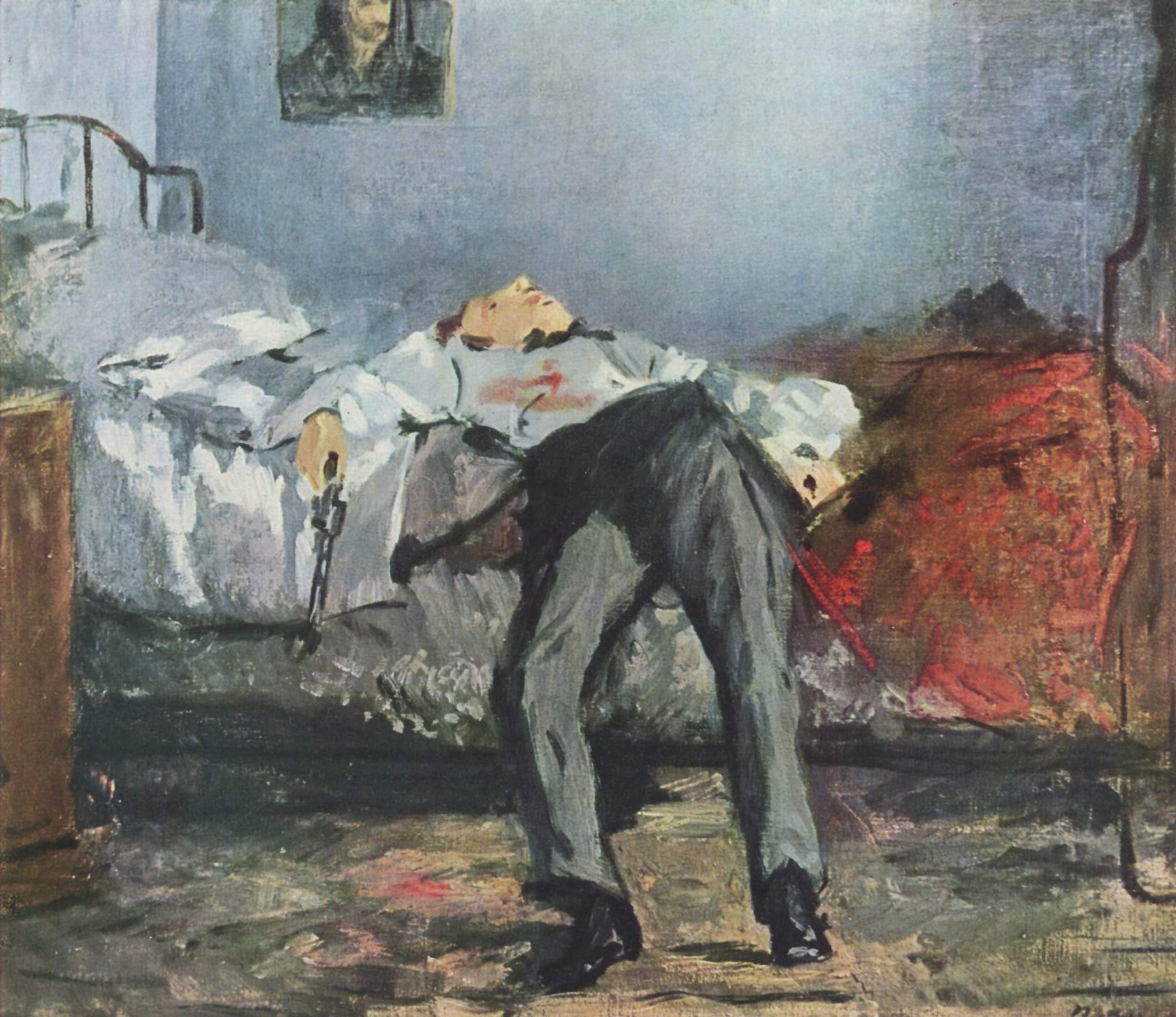
Art & Physix, what a powerful educational pair!

I have been fortunate to be an avid lover of the Arts. And, thanks to David Perkins and his highly recommended book "The Intelligent Eye: Learning to Think by Looking at Art", I was able to see the value of combining the Arts and Physix in my approach to teaching/learning Physix and to assist my students to grow as critical and careful thinkers.
The following activity is an illustration of such a nice marriage of the Arts & Physix. It involves a writing prompt (another way of connecting the students' learning in Physix with other areas of learning, English writing in this case) that introduces students to Scientific Methods, sharpens their critical thinking, and strengthens their listening and writing skills. 

*** Start of Activity ***

a) I hand students a little piece of paper each.
b) I display the two questions "Murder or Suicide? & What is your Physix-Based Evidence?" and ask students to use one side of the sheet of paper to   write their names, the date, and their responses to these two questions.  
c) In addition, I ask the students to use clues from the art piece itself (no Googling or Wikiing is allowed then) to guesstimate the general period of the art piece and the nationality of the artist.
d) I then display the following art piece, ask the students to use their clickers to pick one of the two choices (murder or suicide?) to collect data of their responses, and then give them the signal to start the thinking and writing processes. 

  
e) Once they are done, they stand so that I pair each student up with another student in class (think-pair-share) to discuss their respective responses and commit them to the other side of the same sheet of paper while making sure they write the names of their respective partners (to encourage listening, collaboration, staging an argument, and the value of citation.)
f) The papers are collected and then the students use their clickers once again to select an answer choice to gauge how much change in opinion did occur from pre to post discussion.
g) The class is shown the histogram distribution of their answers to the prompt but the actual answer is not shown (to build up some suspense) for it will be displayed in my reference/citation slide and long after all the slides that introduce and elaborate upon the concepts related to scientific methods.
h) The lively discussions, the intelligent arguments raised, and the preliminary Physix concepts used are the highlight of the activity!


*** End of Activity ***

Now, it is your turn!

1) Without looking up the source code of this web page, assume the role of one of my students, have a partner do the same, and go through the motions of the activity to test it.
2) In the comments area, share the results of your experience, your guesstimates, and the Physix of course!
3) Also comment on how you would use other art pieces to help your students appreciate art on one hand and connect Physix with art on the other hand?
4) I use other art areas in other contexts of coverage of Physix material (which I will share in future posts ISA), share what you do with your students.

Thank you and keep the Arts in mind while doing Physix for they are indeed a powerful educational pair! 


Tuesday, June 4, 2013

Are Simulations Effective?

Simulations programs such as Interactive Physics, PhET, Physlets , iDevices Apps help students either generate animations such as my Gravity Animation or manipulate physical quantities to generate what if situations regarding various Physix phenomena. 

What is your experience with such educational tools and how effective you think they are in advancing your students' understanding of Physix concepts?  

Saturday, June 1, 2013

New AP Physics Offerings, Good or Bad?

The much-talked about redesign of the AP Physics B program has finally materialized. I got an email from the College Board that started with "The 2014-15 school year marks the launch of the redesigned AP Physics 1 and AP Physics 2 courses (formerly AP Physics B).

My initial reaction is "Well, it is about time!" for I always thought that the AP Physics B exam was more about quantity than quality of content. 

I hope the changes are for the good and the initial reading seems to suggest so but I would have to reserve judgment until I complete reading all the material that the College Board is providing. 

If you already delved into the material or have been part of the group that drafted the changes, please, share your ideas, opinion, or suggestions in the comments area. Thank you