Showing posts with label Visual Art. Show all posts

Sunday, June 22, 2014

Physix in Images 2013-2014

First: I apologize for the lack of activity in my blog.

Second: There were precious moments in Physics (3 sections) & Astronomy (new section) and I thought instead of blabbering about them I should just let some pictures convey the extent of the fun as well as learning.

The Smiles of Pride! :-)
Tip of the Hat to Sir Isaac Newton!
When Physix meets Art; only Coolism ensues! :-)
A Cool Student PhysArt Project
Nothing beats the connectedness between Physix concepts!
Mechanical Systems (spring/mass) in Series/Parallel to contrast with Electrical Systems In Series/Parallel
Students love it when Experts present their work!
Dr. Brian McNamara discusses his work on Supermassive Black Holes & Exploding Galaxies!
Star Gazing Extravaganza wraps up a Cool First Year of Astronomy, look at the wide smiles! :-)
Optics meets Art! Backyard of our classroom with the Physix room acting as a Camera Obscura!
iPad used to generate Motion Diagrams. How cool is that?
Physix of Motion meets Art! iPad used to generate the corresponding Motion Diagram.
Testing Hypotheses about Combinations of Human Electric Generators (Take I)
Testing Hypotheses about Combinations of Human Electric Generators (Take II)
Taking the concept of Combinations of Human Electric Generators to its Ultimate Finale!
Students getting close & personal with Optics, Lens Equation Lab!
Physix meets Art, slide from a student's project presentation!
Physix meets Art (refer to previous image!)
Astronomy Lab on Plasma & Light Spectra, Sweet! :-)
Astronomy class experiencing Motion Diagrams (look closely to see the blue dots!)


Third: I hope the above excite you to share your own cool images from last year of Physics or Astronomy.

Thank you for taking the time to view/read the post and I hope you would be kind to leave some comments.

Thank you and take great care! :-)


Tuesday, June 11, 2013

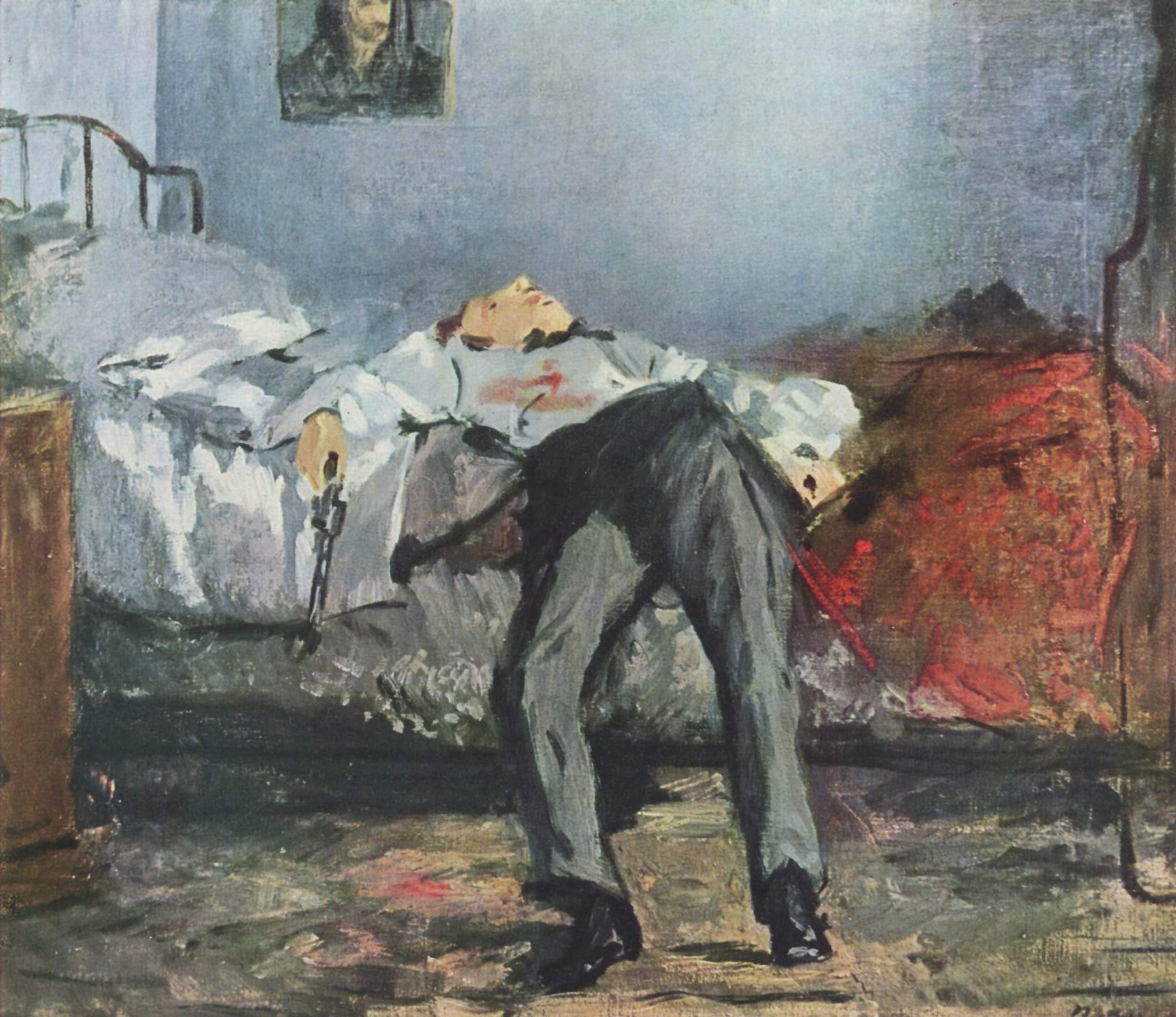
Art & Physix, what a powerful educational pair!

I have been fortunate to be an avid lover of the Arts. And, thanks to David Perkins and his highly recommended book "The Intelligent Eye: Learning to Think by Looking at Art", I was able to see the value of combining the Arts and Physix in my approach to teaching/learning Physix and to assist my students to grow as critical and careful thinkers.
The following activity is an illustration of such a nice marriage of the Arts & Physix. It involves a writing prompt (another way of connecting the students' learning in Physix with other areas of learning, English writing in this case) that introduces students to Scientific Methods, sharpens their critical thinking, and strengthens their listening and writing skills. 

*** Start of Activity ***

a) I hand students a little piece of paper each.
b) I display the two questions "Murder or Suicide? & What is your Physix-Based Evidence?" and ask students to use one side of the sheet of paper to   write their names, the date, and their responses to these two questions.  
c) In addition, I ask the students to use clues from the art piece itself (no Googling or Wikiing is allowed then) to guesstimate the general period of the art piece and the nationality of the artist.
d) I then display the following art piece, ask the students to use their clickers to pick one of the two choices (murder or suicide?) to collect data of their responses, and then give them the signal to start the thinking and writing processes. 

  
e) Once they are done, they stand so that I pair each student up with another student in class (think-pair-share) to discuss their respective responses and commit them to the other side of the same sheet of paper while making sure they write the names of their respective partners (to encourage listening, collaboration, staging an argument, and the value of citation.)
f) The papers are collected and then the students use their clickers once again to select an answer choice to gauge how much change in opinion did occur from pre to post discussion.
g) The class is shown the histogram distribution of their answers to the prompt but the actual answer is not shown (to build up some suspense) for it will be displayed in my reference/citation slide and long after all the slides that introduce and elaborate upon the concepts related to scientific methods.
h) The lively discussions, the intelligent arguments raised, and the preliminary Physix concepts used are the highlight of the activity!


*** End of Activity ***

Now, it is your turn!

1) Without looking up the source code of this web page, assume the role of one of my students, have a partner do the same, and go through the motions of the activity to test it.
2) In the comments area, share the results of your experience, your guesstimates, and the Physix of course!
3) Also comment on how you would use other art pieces to help your students appreciate art on one hand and connect Physix with art on the other hand?
4) I use other art areas in other contexts of coverage of Physix material (which I will share in future posts ISA), share what you do with your students.

Thank you and keep the Arts in mind while doing Physix for they are indeed a powerful educational pair!